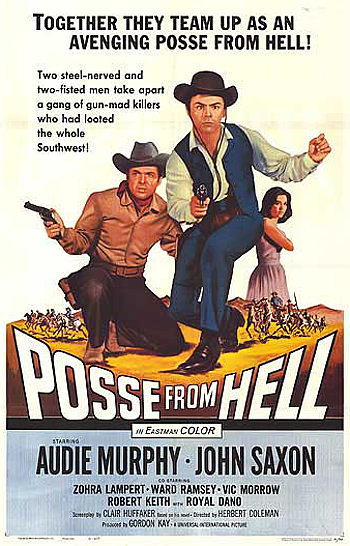
 Audie Murphy plays Banner Cole, a young gunman who rides into the town of Paradise expecting a reunion with his friend, the town marshal.
He finds the marshal dying and three other men dead — the result of a visit by four vicious killers.
Those killers also made off with $11,000 from the Paradise bank and with a young girl, whom they later rape and leave for dead.
Murphy takes the marshal’s badge from his dying friend and, reluctantly, organizes a posse to go after the killers, though he’d rather go alone.
His posse includes a former Union cavalry officer who thinks he should be leading the posse (Robert Keith as Captain Brown), a tenderfoot banker (John Saxon as Seymour), a young gun (Paul Carr as Jock Wiley), the brother of one of those killed (Frank Overton as Burt Hogan), an Indian (Rodolfo Acosta as Johnny Caddo).
Also along for the ride is a drunk (Royal Dano as Uncle Billy), the only relative of the raped girl).
It isn’t much of a posse, Murphy realizes. And it quickly unravels until only Seymour and the Indian remain.
For Seymour, the adventure marks the first time he’s “felt like a man at a man’s game.”
For Johnny Caddo, joining the posse is simply “what a man should do.”
Banner Cole, who respects few men, comes to respect both of them.
But will they be able to stop the outlaws, who have apparently decided to return to Paradise and kill everyone they can.
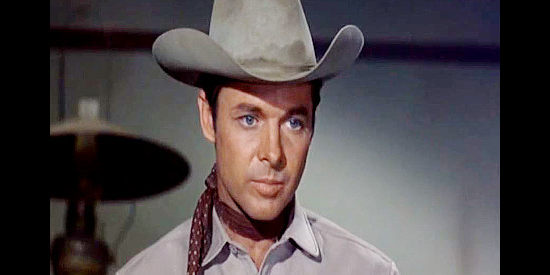
Audie Murphy as Banner Cole, realizing he’ll have to get justice for longtime friend Webb in Posse from Hell (1961)
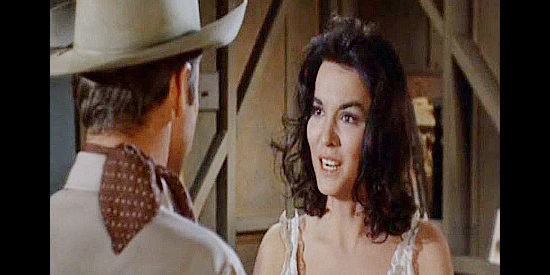
Zohra Lampert as Helen Caldwell, expecting a grim future after her rape in Posse from Hell (1961)
 Review:
Well done, surprisingly violent Western, with Murphy turning in a convincing performance as an embittered gunman who’s pretty much given up on his fellow man.
Saxon also delivers a solid performance as the tenderfoot forced to travel along with the posse to make sure the bank’s money is recovered.
The role of the kidnapped female fell to Zora Lampert. This marked her only big-screen Western. The outlaw gang includes Vic Morrow and Lee Van Cleef, who was soon to find Spaghetti Western fame after playing roles like this in Westerns for a decade.
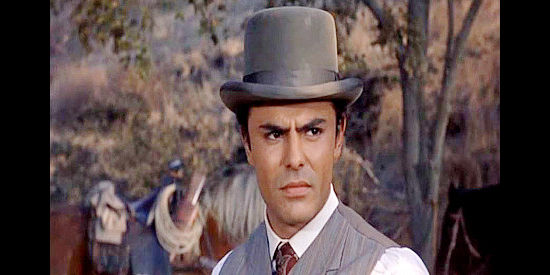
John Saxon as Seymour Kern, finding his manhood tested as a member of the posse in Posse from Hell (1961)
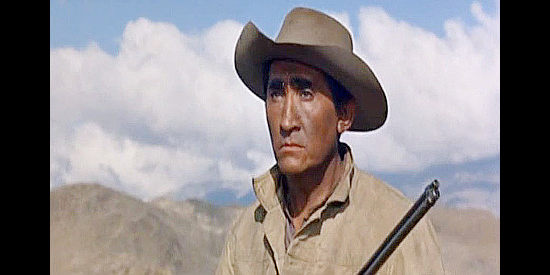
Rodolfo Acosta as Johnny Caddo, on the watch for trouble in Posse from Hell (1961)
Directed by:
Herbert Coleman
Cast:
Audie Murphy … Banner Cole
John Saxon … Seymour Kern
Zohra Lampert … Helen Caldwell
Vic Morrow … Crip
Robert Keith … Captain Brown
Rodolfo Acosta … Johnny Caddo
Royal Dano … Uncle Billy
Frank Overton … Burt Hogan
Paul Carr … Jock Wiley
James Bell … Benson
Ward Ramsey … Marshal Webb
Lee Van Cleef … Leo
Ray Teal … Rossom (the banker)
Runtime: 89 min.
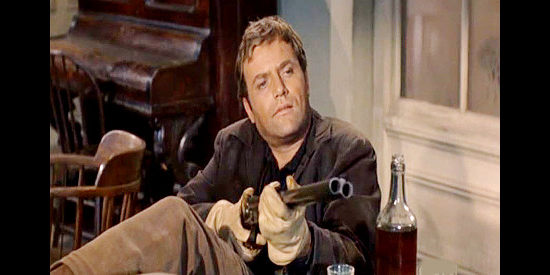
Vic Morrow as Crip, the vicious killer and leader of the outlaw gang in Posse from Hell (1961)
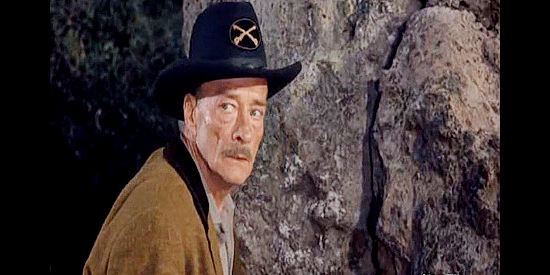
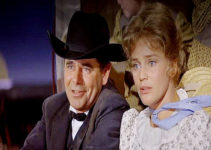
Robert Keith as Capt. Brown, the Union war vet convinced he should lead the posse in Posse from Hell (1961)
Memorable lines:
Townsman: “Never mind about outside help. You can count on us.”
Banner Cole: “The only thing I’m counting on is that there will be more dead men before this is finished. Any of you still want to come, get ready to meet me in the marshal’s office.”
Mr. Rossum: “Don’t you have any personal feelings about this.”
Seymour Kern: “Yes. I want to finish my work here and get back to the main office and civilization as soon as possible.”
Helen Caldwell: “Those men. The smell of blood and sweat and whiskey. It was so ugly.”
Wiley: “Boys, we’re about to make ourselves famous. They’re going to be reading about us all over the territory.”
Seymor Kern: “Not in the obituaries, I hope.”
Seymour Kern: “I’m surprised they ran.”
Johnny Caddo: “Well, in the dark, they probably thought there was a big bunch of us.”
Banner Cole: “That’s not surprising. Kern must have fired 50 shots at that house.
Kern: “And I don’t think I missed it once.”
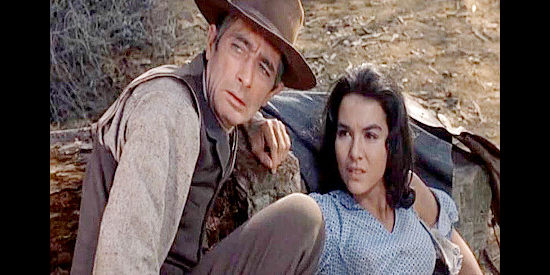
Royal Dano as Uncle Billy, about to lead Helen Caldwell back to safety in Posse from Hell (1961)
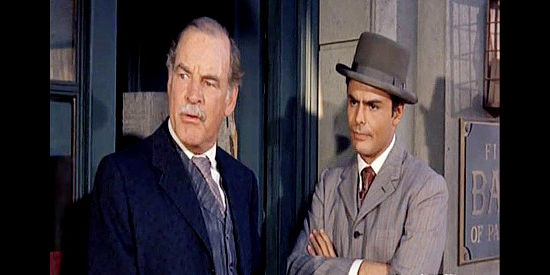
Ray Teal as the banker Rossom with Seymour Kern, an Easterner under his employ in Posse from Hell (1961)
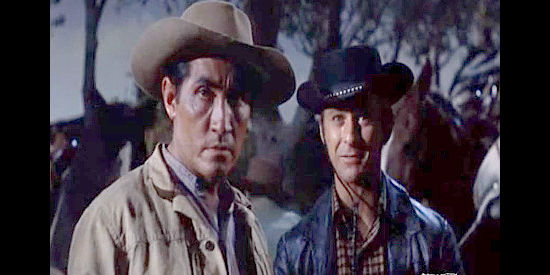
Rodolfo Acosta as Johnny Caddo and Paul Carr as young gun Jock Wiley, about to confront the Crip gang in Posse from Hell (1961)
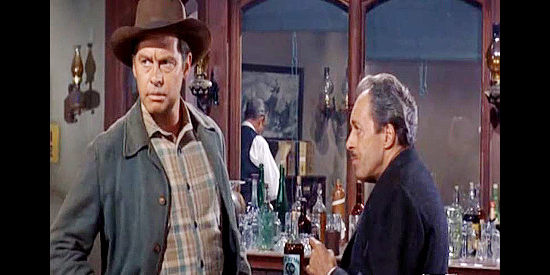
Frank Overton as Burt Hogan, wanting to avenge his brother’s death, but not spend much on the funeral in Posse from Hell (1961)
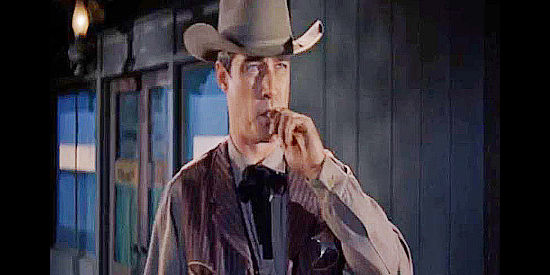
Ward Ramsey as Marshal Webb, making the late-night rounds in Paradise in Posse from Hell (1961)
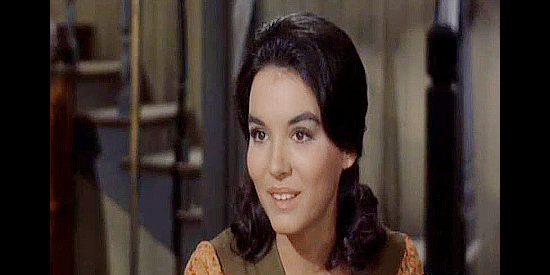
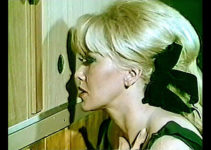
Zohra Lampert as Helen Caldwell, who winds up being kidnapped for watching over her uncle in Posse from Hell (1961)
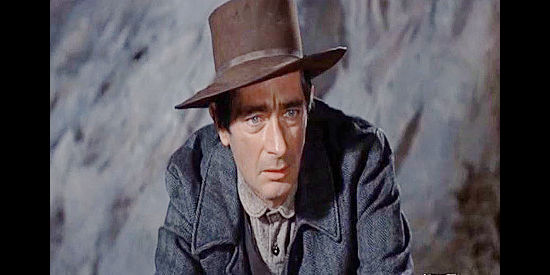
Royal Dano as Uncle Billy, the hard-drinking relative of Helen in Posse from Hell (1961)
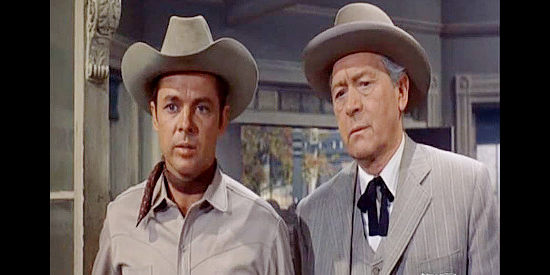
Audie Murphy as Banner Cole and James Bell as Benson, a town leader in Posse from Hell (1961)
)
Wow, what an overlooked gem of a Western this one is. Truthfully, until watching PfH last night I’d never seen an Audie Murphy movie. And frankly, I was a little skeptical about Murphy as a Western actor owing largely to his sweet babyface. It seemed to me he couldn’t possibly possess the gravitas to play a meaningful role in the harsh Western genre. Well, I was dead wrong. Murphy is rock-solid in his role as a deputy leading a posse after four death row escapees who killed the local marshal and several men in a bank robbery, and abducted a town beauty.
Ultimately, this is a buddy Western. The initial posse is a motley bunch of men, most of whom have character flaws that make them unsuited to the task of tracking down a pack of vicious outlaws. In the course of the pursuit, attrition strikes the posse and by film’s end only two remain–Banner Cole (Murphy), and Seymour Kern (John Saxon), a timorous dude banker from New York who is goaded into joining the posse by accusations of cowardace.
Kern is an interesting character. At the outset of the posse’s sojourn, he seems far too soft to possibly survive what’s in store. But as the film progresses, he discovers within himself some steel and some talents he didn’t even suspect he possessed. Even Banner Cole, who’s as tough as they come, notices Kern’s transformation and is suitably impressed. By the picture’s conclusion, Cole and Kern are as thick as thieves.
The acting in PfH is exceptional. In addition to excellent performances from Murphy and Saxon, Rodolfo Acosta is very good as Indian blacksmith Johnny Caddo, as is Zorha Lampert as Helen Caldwell, the abductee who is maltreated by the outlaws, chief among them Leo played by the marvelous Lee Van Cleef.
The cinematography in this film is also outstanding. Like the Ranown pictures, it is set mostly in Lone Pine and the lensing is every bit as good as what you’ll see in those classic Randolph Scott vehicles.
My only criticism–and it’s a minor one–is that some of the dialogue verges on being hokey. One the whole, however, this is a sharply written, well acted and visually pleasing film. It is also a nice blend of misanthropic cynicism leavened with just a touch of hopefulness that humanity isn’t entirely rotten. In short, PfH is a candidate to make my ultimate Top Ten list of Westerns, whenever I put one together.