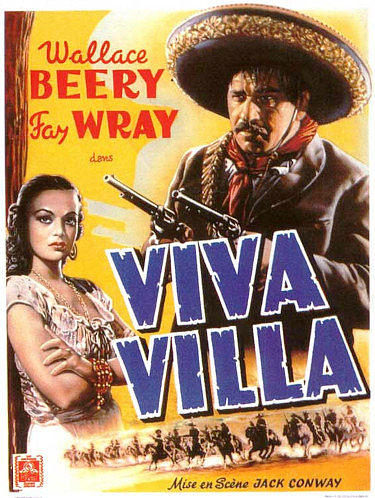
 Wallace Beery plays the title character in this highly fictionalized story of the revolutionary leader’s life.
As a child, he watches his peon father whipped to death for standing up against those who would steal his land. As a young man, he sets about overthrowing the Mexican aristocracy that stole land from the nation’s peons.
Francisco Madero is the reformer Pancho adores. He agrees to fight for Maduro, helping him rise to power. Pancho also changes for Maduro, becoming less ruthless on the field of battle and acting more like a military leader and less like a mercenary bandit.
When Madero is assassinated by those who aren’t eager to lose their riches to his reforms, Pancho rides the revolutionary trail again with his army of supporters.
This time, he does things his way, which means taking no prisoners and giving the enemy no quarter.
But when he retakes Mexico City, he also realizes he’s no Madero. He’s no politician.
If only he could rule from a horse, one of his friends muses. The horse, at least, would do a good job, Pancho responds, before retiring from political life with a vow to return if Maduro’s reforms aren’t enacted.
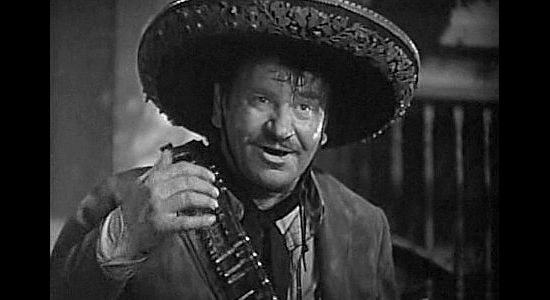
Wallace Beery as Pancho Villa, the peon turned revolutionary leader who becomes a legend in Viva Villa! (1934)
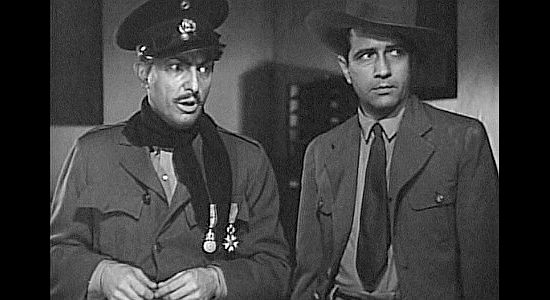
Joseph Schildkraut as Gen. Pascal and Donald Cook as Don Felipe de Castillo, both of whom will turn against Pancho in Viva Villa! (1934)
 Review:
Quite possibly Beery’s biggest Western role, this film came two years after he won a Best Actor Oscar for “The Champ.” He seems well suited for the part, even if he isn’t very convincing as a lady’s man who captures — or at least claims – a new heart in every town he takes.
Katherine de Mille, adopted daughter of famed director Cecil B. DeMille, plays one of the beauties he “marries.” Fay Wray, just a year removed from her role in “King Kong” plays a beauty he never succeeds in marrying.
Produced by David O. Selznick, the film dates badly and is disappointing for its lack of battle footage. And it certainly isn’t a film you’d want to use as a history lesson.
But in 1934, the film received a nomination for the year’s Best Picture in the Academy Awards.
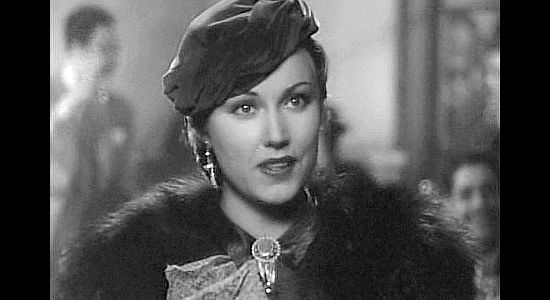
Fay Wray as Teresa, the aristocratic young woman Pancho never ‘marries’ in Viva Villa! (1934)
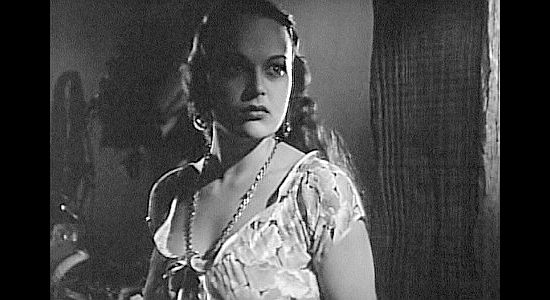
Katherine de Millea as Rosita, a young beauty Pancho ‘marries’ after one of his raids in Viva, Villa! (1934)
Directed by:
Jack Conway
Cast:
Wallace Beery … Pancho Villa
Leo Carrillo … Rodolfo Fierro
Fay Wray … Teresa
Donald Cook … Don Felipe de Castillo
Stuart Erwin … Jonny Sykes
Henry Walthall … Francisco Madero
Joseph Schildkraut … Gen. Pascal
Katherine DeMille … Rosita Morales
George E. Stone … Emilio Chavito
Phillip Cooper … Young Pancho
Frank Puglia … Pancho’s father
David Durand … Bugle boy
Francis X. Bushman Jr. … Wallace Calloway
Adrian Rosley … Alphonso Mendoza
Henry Armetta … Alredo Mendosa
Runtime: 110 min.
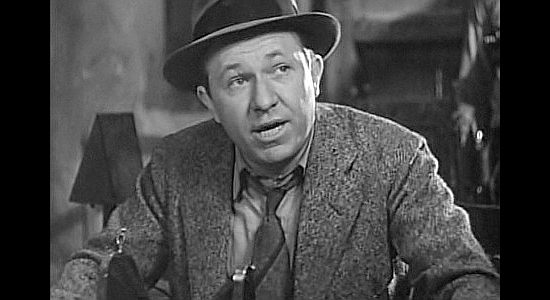
Stuart Erwin as Johnny Sykes, the newspaperman who reports — and sometimes embellishes– Pancho’s exploits in Viva Villa! (1934)
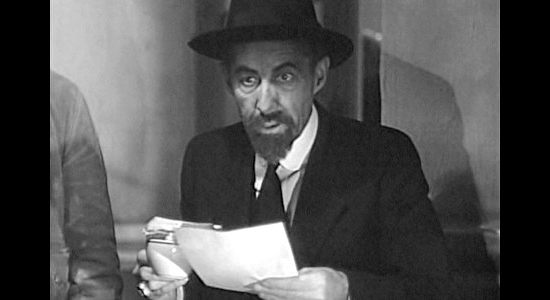
Henry B. Walthall as Francisco Madero, getting the long-awaited news that Mexico City has fallen in Viva Villa! (1934)
Memorable lines:
Pancho’s father: “We have been slaves. Now we become dogs. But I am not a dog. I am a man.”
The rich artistocrat who has claimed his land: “Pedro. Whip him. One hundred lashes. Is there anybody else here who thinks he is a man?”
Pancho Villa to a scribe: “You draw something to remind her of me.” He smiles wide. “A bull, with great big horns.”
Francisco Madero: “I didn’t send for Pancho Villa, the bandit. I sent for Pancho Villa, the peon. The man whose father was whipped to death at the stake. Whose mother died under the lash. Whose sister was ravished by hacendado, because he was rich and she was poor.”
Pancho Villa to Madero: “You bring great dreams to my heart.”
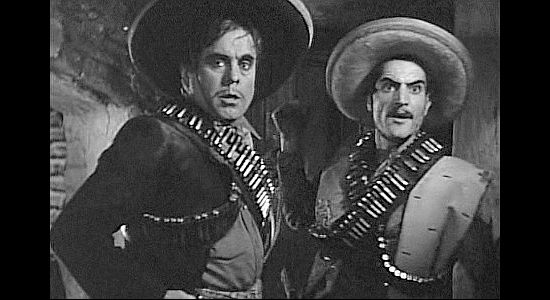
Leo Carrillo as Sierra and Pedro Regas as Tomas, two of Pancho’s chief lieutenants in Viva Villa! (1934)
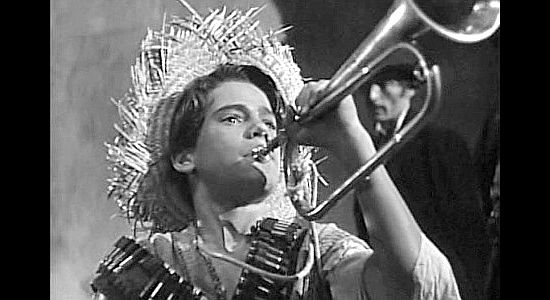
David Durand as the young boy who insists on joining Pancho’s revolutionary army as a bugler in Viva Villa! (1934)
Pancho Villa to Madero: “I don’t think you know much about war. You know about loving people. But you can’t win a revolution with love. You’ve got to have hate. You are the good side. I am the bad side.”
Pancho Villa, after the revolution ends: “I ain’t no news no more, Johnny?”
Johnny Sykes: “You’re better than news. You’re history.”
Pancho Villa, beginning a second revolution: “This is the same revolution. Only I win it in my own way. So it stay won.”
Johnny Sykes to Pancho Villa: “If you could have been president on a horse, you’d have been great.”
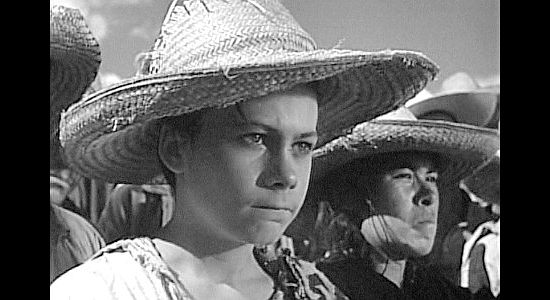
Phillip Cooper as a young Pancho Villa, watching his peon father being whipped to death in Viva Villa! (1934)
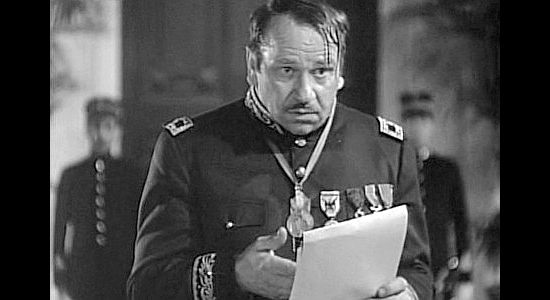
Wallace Beery as Pancho Villa, trying his best to protect Maduro’s legacy in Viva Villa! (1934)
)